
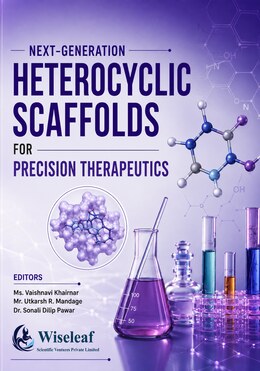
About this Book
Few structural motifs have shaped modern medicine as decisively as the heterocyclic ring. The substitution of a single carbon atom by nitrogen, oxygen or sulphur alters electron distribution, proton affinity, hydrogen-bonding capacity and metabolic fate, and in doing so converts an inert hydrocarbon framework into a molecule capable of precise biological recognition. A substantial proportion of the drugs in clinical use today carries at least one such ring. The scaffold is therefore not an ornament of medicinal chemistry but its working vocabulary.
What has changed in recent years is not the importance of these scaffolds but the manner in which they are conceived, evaluated and delivered. Design that once proceeded by analogy and iteration is now informed by machine learning models trained on very large structural datasets. Binding hypotheses that once waited on synthesis are tested first in silico. Formulation is no longer a downstream accommodation but a design constraint that reaches back into the choice of ring system itself. And the therapeutic question has narrowed from the population to the individual patient. This volume was assembled to trace those shifts across a single structural theme.
The ten chapters move deliberately from foundation to frontier. The opening chapter establishes the chemistry – classification, aromaticity, reactivity and the historical arc from alkaloid isolation to rational design. The second and third chapters take up the computational turn, examining artificial intelligence in scaffold design and the docking, virtual screening and structure-based methods that now precede the bench. Chapters four, five and eight survey the therapeutic ground itself, covering pyridine, quinoline and triazole based agents, the heterocyclic scaffolds that underpin targeted cancer therapy, and the antiviral and antimicrobial compounds on which the response to antimicrobial resistance increasingly depends. The remaining chapters address the conditions under which a promising molecule becomes a usable medicine, developing a heterocycle-aware approach to nanocarrier design, the green methodologies that reduce the environmental cost of synthesis, precision medicine and pharmacogenomics, and the smart design strategies likely to occupy the coming decade. Designed for postgraduate students, research scholars, medicinal chemists, academicians and pharmaceutical-industry professionals, the book integrates chemistry, computation, formulation science and clinical genomics into a single continuous argument for the future of heterocyclic drug discovery.
Each chapter is independently peer-reviewed and has its own dedicated page with title, authors and abstract. The complete volume is available for purchase and is published under a single book-level DOI.
Table of Contents
About the Editors